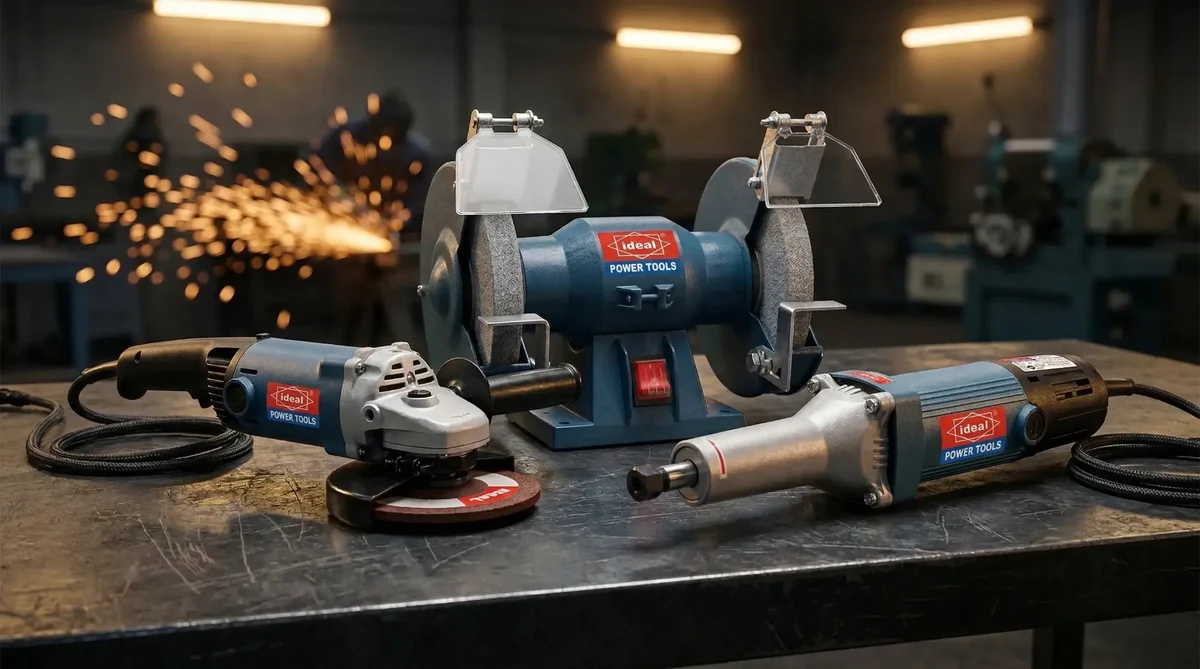
The Complete Guide to Abrasive Technology: Tools and Materials
Abrasive technology forms the backbone of modern manufacturing, construction, and maintenance operations worldwide. From the smartphone screen in your pocket to the engine in your car, abrasive materials and tools have played a crucial role in shaping, smoothing, and finishing virtually every manufactured product you encounter daily.
What is Abrasive Technology?
Abrasive technology encompasses the science and application of materials specifically designed to remove material from workpieces through mechanical action. These materials work by creating controlled friction that wears away surface layers, allowing for precise shaping, smoothing, or cleaning operations.
The fundamental principle behind all abrasive processes involves harder particles acting upon softer materials. This hardness differential enables the abrasive to cut, grind, or polish the target material while maintaining its own structural integrity throughout the process.
A Brief History of Abrasives
Humans have utilized abrasive materials for thousands of years, beginning with naturally occurring stones for sharpening tools and weapons. Ancient civilizations discovered that certain minerals like quartz and flint could effectively shape and sharpen metal implements.
The industrial revolution marked a turning point in abrasive technology. The development of bonded abrasives in the late 1800s revolutionized manufacturing processes, enabling mass production of precision components. This period saw the birth of companies that remain industry leaders today, establishing the foundation for modern abrasive manufacturing.
The 20th century brought synthetic abrasives, dramatically expanding the capabilities and applications of abrasive technology. Silicon carbide, introduced in 1891, and aluminum oxide, developed shortly after, provided consistent quality and performance that natural abrasives couldn’t match.
Types of Abrasive Materials
Natural Abrasives
Natural abrasives continue to serve important roles in modern manufacturing, particularly where specific material properties or traditional methods are preferred.
Diamond stands as the hardest natural abrasive, rating 10 on the Mohs hardness scale. Industrial diamonds excel in applications requiring extreme precision and durability, such as cutting tools for machining hard materials and grinding wheels for carbide tooling. Their exceptional thermal conductivity and chemical inertness make them ideal for specialized applications.
Corundum, primarily composed of aluminum oxide, has been used for centuries in grinding applications. Natural corundum varieties include emery, which contains iron oxides that give it distinctive cutting characteristics. While largely replaced by synthetic alternatives, natural corundum still finds use in specific applications where its unique properties provide advantages.
Garnet offers excellent cutting ability with relatively low dust generation, making it popular for waterjet cutting and sandblasting applications. Its angular fracture pattern creates sharp cutting edges that maintain effectiveness throughout the abrasive process.
Synthetic Abrasives
Synthetic abrasives dominate modern industrial applications due to their consistent quality, controlled properties, and cost-effectiveness.
Silicon Carbide provides exceptional hardness and sharp cutting action, making it ideal for grinding cast iron, non-ferrous metals, and non-metallic materials. Its thermal conductivity helps dissipate heat during grinding operations, preventing workpiece damage. Silicon carbide excels in applications requiring aggressive material removal or when working with hard, brittle materials.
Aluminum Oxide represents the most widely used synthetic abrasive, offering excellent versatility across numerous applications. Its toughness and ability to fracture in a controlled manner create continuously sharp cutting edges. Different grades of aluminum oxide serve various purposes, from coarse grinding operations to fine polishing applications.
Cubic Boron Nitride (CBN) ranks as the second hardest synthetic material, approaching diamond’s cutting performance while offering superior thermal stability. CBN excels in grinding hardened steels and superalloys, where its heat resistance prevents workpiece burning and extends tool life significantly.
Abrasive Tools and Their Applications
Grinding Wheels
Grinding wheels represent one of the most critical abrasive tools in manufacturing. These precisely engineered products combine abrasive grains with bonding materials to create tools capable of achieving specific surface finishes and dimensional tolerances.
Vitrified bond wheels dominate precision grinding applications, offering excellent dimensional stability and consistent performance. The ceramic bonding material provides rigid support for abrasive grains while maintaining porosity for coolant flow and chip clearance.
Resin bond wheels excel in applications requiring flexibility and smooth finishes. The organic bonding material absorbs vibrations and allows for higher operating speeds, making these wheels ideal for cut-off operations and surface grinding applications.
Sandpaper and Abrasive Belts
Coated abrasives, including sandpaper and abrasive belts, provide versatility and ease of use across countless applications. These products feature abrasive grains bonded to flexible backing materials, enabling conforming to complex shapes and surfaces.
Paper backing offers economy and flexibility for hand sanding operations, while cloth backing provides durability for machine sanding applications. Polyester film backing delivers exceptional dimensional stability for precision finishing operations.
Modern coated abrasives incorporate advanced features like precision-shaped grains that maintain sharpness longer and anti-loading treatments that prevent material buildup. These innovations significantly improve performance and extend product life.
Polishing Compounds and Buffs
Polishing operations require specialized abrasive compounds that contain extremely fine particles suspended in carrier materials. These compounds work in conjunction with polishing wheels or buffs to achieve mirror-like finishes on various materials.
Diamond polishing compounds provide the ultimate in cutting power for hard materials, while aluminum oxide compounds offer versatility for general-purpose polishing. Cerium oxide compounds excel in glass polishing applications due to their unique chemical polishing action.
Cleaning Tools
Abrasive cleaning tools serve essential maintenance and preparation functions across industries. Wire brushes, including custom industrial brushes, remove rust, scale, and surface contaminants while preparing surfaces for coating applications.
Abrasive blast media enable efficient cleaning and surface preparation for large structures and components. Different media types, from glass beads to steel shot, provide specific surface profiles and cleaning characteristics.
Factors to Consider When Selecting Abrasives
Material Being Processed
The workpiece material fundamentally determines abrasive selection. Hard materials like hardened steel require tough abrasives such as aluminum oxide or CBN, while soft materials may need sharp-cutting abrasives like silicon carbide to prevent loading.
Material thermal sensitivity also influences abrasive choice. Heat-sensitive materials require abrasives and processes that minimize temperature rise during machining operations.
Desired Finish
Surface finish requirements dictate abrasive grain size and type. Coarse grains remove material quickly but leave rougher finishes, while fine grains produce smooth surfaces with minimal material removal rates.
The relationship between grain size and surface finish follows predictable patterns, allowing engineers to select appropriate abrasives for specific finish requirements.
Equipment Limitations
Machine capabilities, including power, speed, and rigidity, influence abrasive selection. High-power machines can utilize aggressive abrasives effectively, while lighter machines may require more forgiving abrasive types.
Safety considerations also impact selection, as certain abrasive operations require specific safety equipment and procedures to protect operators and maintain safe working conditions.
Recent Advances in Abrasive Technology
Nanomaterials
Nanotechnology has revolutionized abrasive development, enabling creation of materials with precisely controlled properties at the molecular level. Nanostructured abrasives offer improved cutting efficiency and longer tool life through optimized grain structures.
Sol-gel aluminum oxide represents a breakthrough in abrasive manufacturing, featuring controlled porosity and enhanced fracture characteristics that maintain sharp cutting edges throughout the grinding process.
Precision Grinding
Advanced grinding technologies enable achievement of previously impossible tolerances and surface finishes. Creep-feed grinding processes remove large amounts of material in single passes while maintaining excellent surface quality.
Ultra-precision grinding machines achieve nanometer-level surface finishes essential for optical components and semiconductor manufacturing. These systems integrate advanced control technologies with specially designed abrasive tools.
Sustainable Abrasives
Environmental considerations increasingly influence abrasive development. Manufacturers focus on reducing waste, improving recyclability, and developing bio-based bonding systems that minimize environmental impact.
Water-based coolants and filtration systems reduce environmental contamination while improving workplace safety. These systems enable closed-loop operation with minimal waste generation.
Conclusion
Abrasive technology continues evolving rapidly, driven by demands for improved performance, sustainability, and precision. Advanced materials science enables development of abrasives with tailored properties for specific applications, while automation and artificial intelligence optimize grinding processes for maximum efficiency.