How Material Flow Dynamics Transform Extrusion Performance
Extrusion processes form the backbone of modern manufacturing, transforming raw materials into everything from plastic pipes to aluminum profiles. These continuous manufacturing methods push materials through shaped dies to create products with consistent cross-sections, making them essential for industries ranging from construction to packaging.
Understanding Material Flow in Extrusion
Material flow within an extruder follows predictable patterns governed by fundamental physics principles. Raw materials enter the feed section as solid pellets or powders, then undergo heating, melting, and pressurization as they progress toward the die.
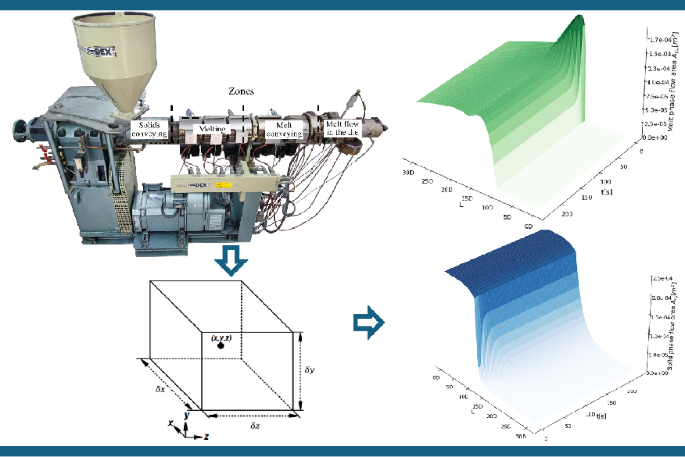
The extruder screw creates three distinct zones of material behavior. In the feed zone, solid materials experience compression and initial heating through friction. The transition zone sees partial melting as temperature rises and pressure builds. Finally, the metering zone contains fully molten material that requires precise flow control to maintain consistent output.
Several interconnected factors influence this flow behavior. Material properties determine how substances respond to heat and pressure. Extruder design elements shape the flow path and mixing characteristics. Operating conditions provide the energy inputs that drive the entire process.
Successful flow management requires balancing these elements to achieve optimal material transformation while maintaining steady throughput rates.
Key Factors Affecting Material Flow
Material Properties
Viscosity stands as the most critical material property affecting flow dynamics. Higher viscosity materials require more energy to push through the extruder, leading to increased pressure buildup and potential flow instabilities. Temperature significantly influences viscosity, with most polymers becoming more fluid as they heat up.
Thermal conductivity determines how quickly materials absorb and distribute heat throughout their mass. Poor thermal conductors may develop hot spots or cold zones that create flow irregularities. Density variations affect how materials pack in the feed section and influence pressure transmission through the extruder.
Extruder Design Elements
Screw geometry profoundly impacts flow patterns and mixing efficiency. The channel depth, flight width, and helix angle all contribute to material advancement rates and pressure development. Deeper channels allow higher throughput but may reduce mixing quality, while shallower channels increase shear heating and mixing intensity.
Die design creates the final flow restrictions that shape the extruded product. Complex die geometries require careful flow balancing to prevent material stagnation or uneven wall thickness. The land length and entrance angle influence pressure requirements and surface quality of the finished product.
Operating Conditions
Temperature profiles along the extruder barrel control material transformation rates and final melt quality. Proper temperature control ensures complete melting while avoiding thermal degradation. Each material requires specific temperature ranges for optimal processing.
Pressure throughout the system reflects the resistance to flow and indicates potential processing problems. Excessive pressure may signal flow restrictions or inappropriate operating conditions. Screw speed directly affects residence time, mixing intensity, and heat generation through shear.
Common Challenges in Material Flow
Stagnation and Dead Zones
Stagnation occurs when material remains stationary in certain extruder regions, leading to thermal degradation and contamination of fresh material. These dead zones typically form in areas with poor screw design or inappropriate operating conditions.
Extended residence times in stagnant zones can cause material breakdown, discoloration, and the formation of degradation products that compromise final product quality. Identifying and eliminating these zones requires careful analysis of flow patterns and potential design modifications.
Channeling Effects
Channeling happens when material follows preferential flow paths, bypassing portions of the available cross-section. This phenomenon reduces mixing efficiency and creates non-uniform heating patterns that affect product consistency.
Severe channeling can lead to incomplete melting, poor dispersion of additives, and variation in product properties. Addressing channeling often requires modifications to screw design or adjustments to operating parameters.
Melt Fracture
Melt fracture manifests as surface irregularities on extruded products, ranging from minor roughness to severe distortions. This defect occurs when material experiences excessive stress during flow through restrictive die geometries.
The onset of melt fracture depends on material properties, die design, and processing conditions. Once it begins, melt fracture can severely compromise product appearance and performance, making prevention essential for quality production.
Techniques for Optimizing Material Flow
Advanced Screw Designs
Modern extruders incorporate specialized mixing elements that enhance material homogenization and flow distribution. These elements create additional shear and elongational flows that improve mixing without significantly increasing pressure requirements.
Barrier screws separate solid and molten material phases, allowing more controlled melting and improved temperature uniformity. These designs prevent solid particles from reaching the die while ensuring complete material transformation.
Optimized Die Geometries
Computational flow analysis enables engineers to design dies that promote uniform material distribution and minimize flow stagnation. Streamlined flow channels reduce pressure requirements while maintaining product quality.
Adjustable die systems allow real-time optimization of flow patterns to accommodate different materials or product specifications. These adaptive systems provide flexibility while maintaining consistent processing conditions.
Precise Temperature Control Systems
Advanced temperature control systems maintain precise thermal profiles that optimize material flow characteristics. Multi-zone heating allows fine-tuning of temperature gradients to match specific material requirements.
Integrated cooling systems, including drum coolers, help manage thermal conditions and prevent overheating in critical process zones. These systems provide the thermal control necessary for consistent material flow and product quality.
The Role of Cooling Systems
Effective cooling management plays a crucial role in controlling material flow dynamics and final product properties. Cooling systems remove excess heat generated during processing and help maintain optimal material temperatures throughout the extrusion process.
Air Cooling Systems
Air cooling provides cost-effective temperature control for many extrusion applications. Forced air circulation removes heat from extruder barrels and die assemblies, preventing overheating that could disrupt material flow patterns.
These systems offer quick response times and easy installation, making them suitable for applications where moderate cooling capacity meets process requirements. Proper air distribution ensures uniform cooling and prevents thermal gradients that could affect flow stability.
Liquid Cooling Systems
Liquid cooling systems deliver higher cooling capacity for demanding applications that generate significant process heat. Water or specialized coolants circulate through cooling channels to maintain precise temperature control.
These systems excel in high-throughput operations where air cooling cannot provide sufficient heat removal. Liquid cooling also offers more precise temperature control, enabling tighter process tolerances and improved product consistency.
Future Trends
Emerging technologies promise significant advances in material flow optimization and process control. Machine learning algorithms analyze process data to predict optimal operating conditions and prevent flow-related problems before they occur.
Smart sensors provide real-time monitoring of flow patterns and material conditions throughout the extruder. This continuous feedback enables automated adjustments that maintain optimal flow dynamics and product quality.
Advanced simulation tools allow engineers to model complex flow behaviors and test design modifications virtually before implementing physical changes. These capabilities accelerate development cycles and reduce the cost of process optimization.
Research into novel materials and processing techniques continues to expand the possibilities for extrusion applications. Bio-based materials, nano-composites, and recycled content present new challenges and opportunities for flow optimization.
Conclusion
Understanding material flow dynamics provides the foundation for achieving superior extrusion performance. The principles and techniques discussed here offer practical pathways to improved product quality, reduced energy consumption, and enhanced operational efficiency.